
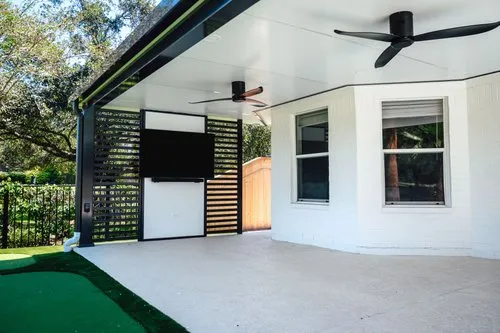
Creating the perfect patio does not depend on looks alone. It depends on choosing the right structure for the space you have. The ideal cover can make the difference between a barely usable patio and one that becomes your favorite spot, while the wrong one leaves you with shade in the wrong place or posts where you want to walk.
This guide walks through the main patio cover types, what kind of outdoor space each one suits and how to choose between them based on size, use, sun and style. New Gen Patio has built 900+ outdoor living spaces across Houston and Austin, and we help you find the best solution based on your surroundings, lifestyle, and needs.
Top Patio Cover Options for Your Outdoor Space
The three patio cover types are freestanding, cantilevered and attached, and the best one depends on your layout, sun exposure and aesthetic goals. Below are the three most popular options we recommend for Houston homeowners. For the structural side, see our attached vs freestanding vs cantilever guide.
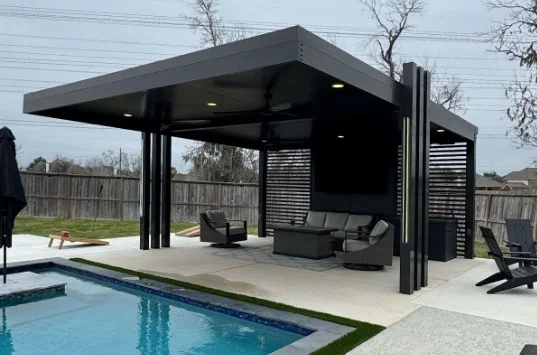
Freestanding Pergola
A freestanding pergola is a standalone structure that can be placed anywhere in your backyard, with its own posts and no connection to the house. It works best for large patios and open yards where you want a separate destination: a lounge by the pool, a dining area at the far end of the lawn or a hot tub corner.
Because it is installed independently from your home's structure, it is fully customizable in height, dimensions and finishes, and it does not depend on your roofline or the position of your doors. It is also the natural choice for a fire pit area: an open pergola lets heat and smoke rise freely, and a covered version built over a fire pit should be at least 10 feet high. A freestanding pergola is perfect when you want a distinct, dedicated space that organizes a big yard into zones. See how we build them on our freestanding patio covers page.
Cantilevered Pergola
A cantilevered pergola projects its roof outward from posts on one side, so the shaded area has no front posts. The result is a clean, modern look and an open floor, which makes it the right fit for spaces with limited room or views you do not want to block.
It shines beside a pool, where posts at the water's edge would get in the way, on decks that face a lake, a golf course or a garden, and in narrow side yards or driveways where every foot of clearance counts. Shade lands exactly where you need it without obstructing walkways or sightlines. Because the beams carry the roof from one side, a cantilever needs careful engineering, which is why our cantilever aluminum pergola is designed for each site rather than chosen from a catalog. It is a sleek option when elegance and space efficiency come first.
Attached Covered Patio
An attached covered patio connects directly to your home's structure, extending the roofline over the area right outside your back door. It is the best fit for patios that sit against the house, where you want the indoor living room to flow outside without a step in comfort.
It shelters furniture, doors and windows from sun and rain, and it is easy to integrate with recessed LED lighting, ceiling fans and electrical outlets. That makes it the natural home for an outdoor kitchen, a TV wall or a dining table that stays outside all year. In small yards it also saves space, because the house carries one side and fewer posts reach the ground. An attached covered patio is the ideal solution for outdoor dining and hosting with the comfort of being indoors.
Choose the Roof for the Shade You Want
Once you know the type, the roof decides how the space feels: an open pergola filters light, a polycarbonate roof keeps you dry with natural light, and an insulated roof gives full shade and the coolest space. Any of the three types can carry any of these roofs.
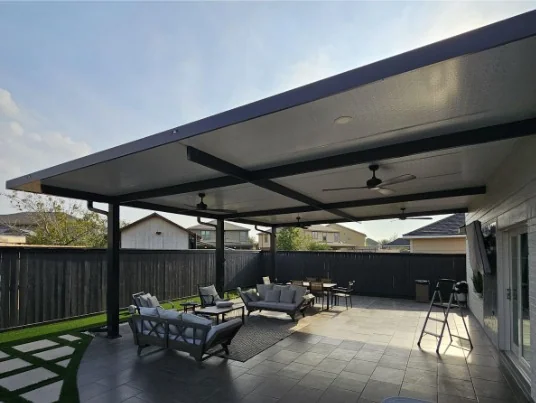
Open slats suit spaces you use mostly in spring and fall, where you want sun patterns, breeze and climbing plants more than shelter. A polycarbonate roof blocks harmful UV rays while letting daylight through, which keeps a covered area bright, a good choice next to windows you do not want to darken. An insulated roof panel blocks direct sun, keeps the area noticeably cooler and quiets the sound of rain, so it is the usual pick for outdoor kitchens and spaces used every day in Texas summers. You can compare both roof systems on our custom aluminum pergola and patio cover page.
How to Choose the Right Patio Cover
The right patio cover is selected based on three things: your patio layout and size, the function you want, and your architectural style and privacy level. Walk through each one before choosing a type.
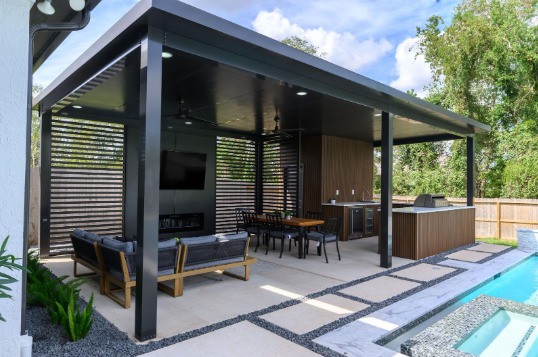
Patio Layout, Size and Sun
Start with the footprint. A slab right off the back door points to an attached covered patio, a large open yard leaves room for a freestanding pergola, and a narrow strip or a pool edge often calls for a cantilever. Measure where people will actually sit, cook and walk, then make sure posts land outside those paths.
Then watch the sun. In Texas the hardest light comes from the west in the afternoon, so a patio facing west needs deeper shade and sometimes side protection, while an east-facing patio is already pleasant in the evening. Check drainage and existing concrete too: if you are pouring a new slab or adding turf, plan the cover at the same time so slopes and water flow work together. Our team coordinates concrete, turf and landscaping in the same project through our additional services.
How You Will Use the Space
Function decides as much as size. A dining area or outdoor kitchen needs full shade and rain protection, plus power and lighting planned before the build, which points to an attached cover or a freestanding structure with a solid roof. A lounge for reading or watching the kids in the pool can live with filtered light.
Think about evenings and seasons too. If you want to watch the game outside, a TV wall needs a solid roof and the deepest shade. If you picture fall nights by the fire, decide between an electric fireplace built into a TV wall and a real fire pit, which needs a taller structure. Listing every activity you want to host is the fastest way to narrow the type, the size and the roof. See our guide to a fireplace or fire pit under a covered patio for that decision.
Architectural Style and Privacy
The cover should look like it was always part of the house. An attached covered patio usually follows the roofline and colors of the home, while a freestanding or cantilevered pergola can be bolder and more modern. Powder-coated aluminum comes in many colors and finishes, so the structure can match the trim or stand out on purpose, without the staining a cedar structure needs.
Privacy is the last filter. If neighbors look straight into your yard, plan Privacy Walls, slats or Deco Shades on that side from the start, and consider Electrical Zipshades (motorized screens that run in side tracks) or Enclosure Nets where you want protection from sun, wind and mosquitoes. If you have a homeowners association, the style, height and color will also need its approval. We prepare the drawings and HOA/permit documents (engineer-stamped when required); you submit them and pay the fees. Austin homeowners can read our Austin patio cover permits and HOA guide.
Why Choose New Gen Patio?
New Gen Patio builds every structure in high-quality architectural aluminum with a powder-coat finish and insulated roof options, designed to last and to impress. Every project is guided by one professional team, from the initial consultation to the final installation, ensuring a result that feels personal, premium and built for life.
Aluminum is the reason the structure lasts in Texas: it does not rot, warp or need staining, and the powder coat holds its color through sun and humidity. Structures are engineered for wind resistance of up to 120 mph and backed by a 5-year structural warranty, a 5-year finish warranty and our $0 Maintenance Guarantee. Once the permit is in hand, most structural installations take 4 to 5 business days. See every option on our custom aluminum pergola and patio cover page.
Ready to Reimagine Your Space?
The best way to choose a patio cover type is to see it planned for your own home. A free consultation and custom 3D design with our team let you compare a freestanding, cantilevered or attached cover, and each roof option, before you decide. Our designer measures the space, studies the sun and listens to how you want to use it.
Financing keeps the project simple: up to 0% financing for 18 months. We serve Houston, Austin and surrounding areas, including Cypress, Spring, Katy, Sugar Land and The Woodlands. Browse real projects in our covered patio project catalog, or compare structures in our guide to the difference between a covered patio and a pergola.
We design and build them across Texas: aluminum patio covers in Houston, aluminum patio covers in Austin and covered patios in San Antonio.