
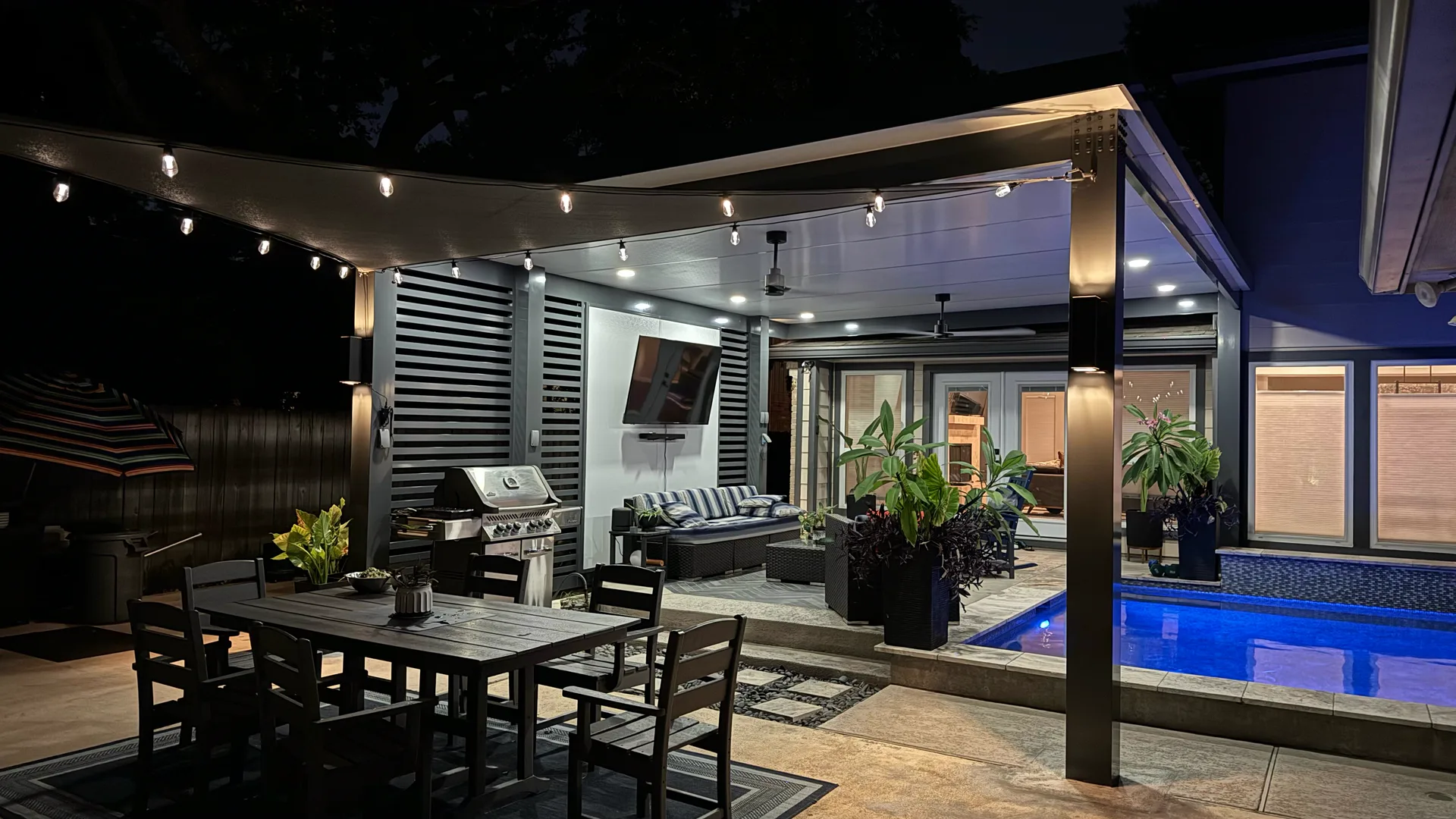
An aluminum pergola is a custom outdoor structure built from powder-coated aluminum that adds shade, style and usable living space to your backyard without the upkeep of older materials. In Houston, where heat, humidity and Gulf Coast storms punish anything outdoors, aluminum has become the material homeowners choose when they want a structure that lasts. This aluminum pergola Houston guide walks you through everything you should know before you buy: roof options, colors, sizes, permits, HOA approval, timeline and what actually drives the price.
New Gen Patio has designed and built 900+ outdoor living projects across Houston and Austin, and this guide reflects what we see homeowners ask most often before their free consultation. Read it top to bottom, or jump to the section you need. Each part links to a deeper guide when you want more detail, and you can see how we build each structure on our custom aluminum pergola and patio cover page.
What Is an Aluminum Pergola (and How It Differs from a Kit or a Covered Patio)
A pergola is an outdoor structure with posts and an overhead framework that shades and defines a space. Before comparing roofs or colors, it helps to know how a custom aluminum pergola differs from a store-bought kit and from a fully covered patio.
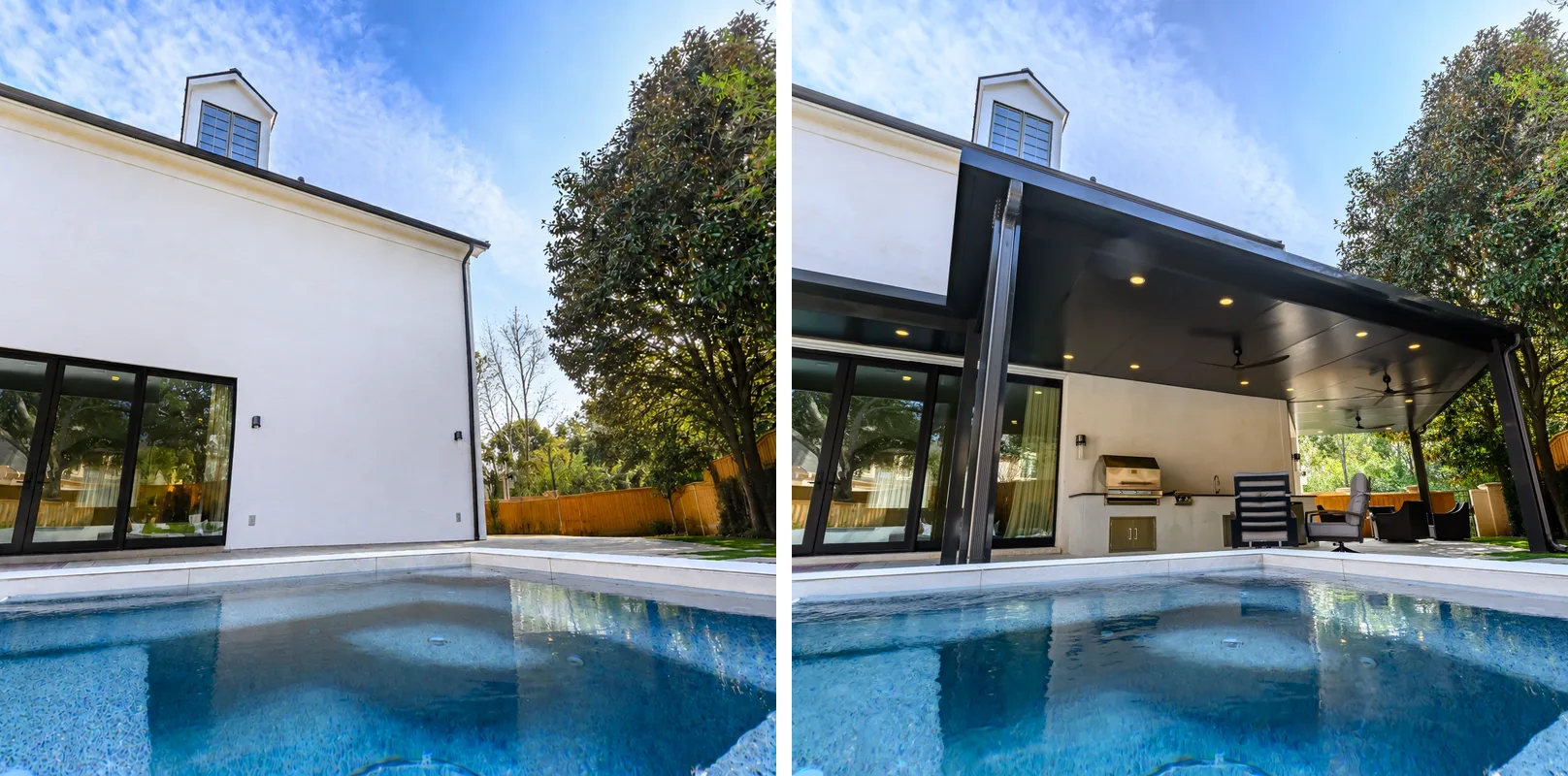
Aluminum pergola vs a big-box kit
A custom aluminum pergola is engineered for your lot, installed by a crew and backed by a warranty, while a kit is a box of parts you assemble yourself. The kit looks cheaper up front, but the price rarely includes installation, footings, permits, engineering for wind, or a real warranty. Those costs show up later, and in Houston they matter.
Kits are built to one generic size and load, so they rarely match your roofline, your slab or the wind your neighborhood sees during a storm. A custom build starts from your measurements, uses structural aluminum sized for the span, and anchors to footings designed for the soil. You can see what goes into a custom build on our custom aluminum pergola and patio cover page.
Pergola vs covered patio
A pergola can have open slats, louvers, or a solid insulated roof, while a covered patio is fully roofed for complete shade and rain protection. Many Houston homeowners choose an aluminum pergola with insulated roofing to get the look of a pergola with the shade of a covered patio.
The difference matters for how you will use the space. Open slats suit a garden or a pool deck where you want filtered sun. A solid roof suits an outdoor living room with a TV wall, a kitchen or furniture you want to keep dry. See our full breakdown in the difference between a covered patio and a pergola.
Why Aluminum Wins in Houston Heat and Humidity
Aluminum wins in Houston because it does not rust, rot or warp in the conditions that wear down outdoor structures here. Two questions usually come up at this point: how it handles the climate, and whether it is worth the investment.
Built for Gulf Coast heat, humidity and storms
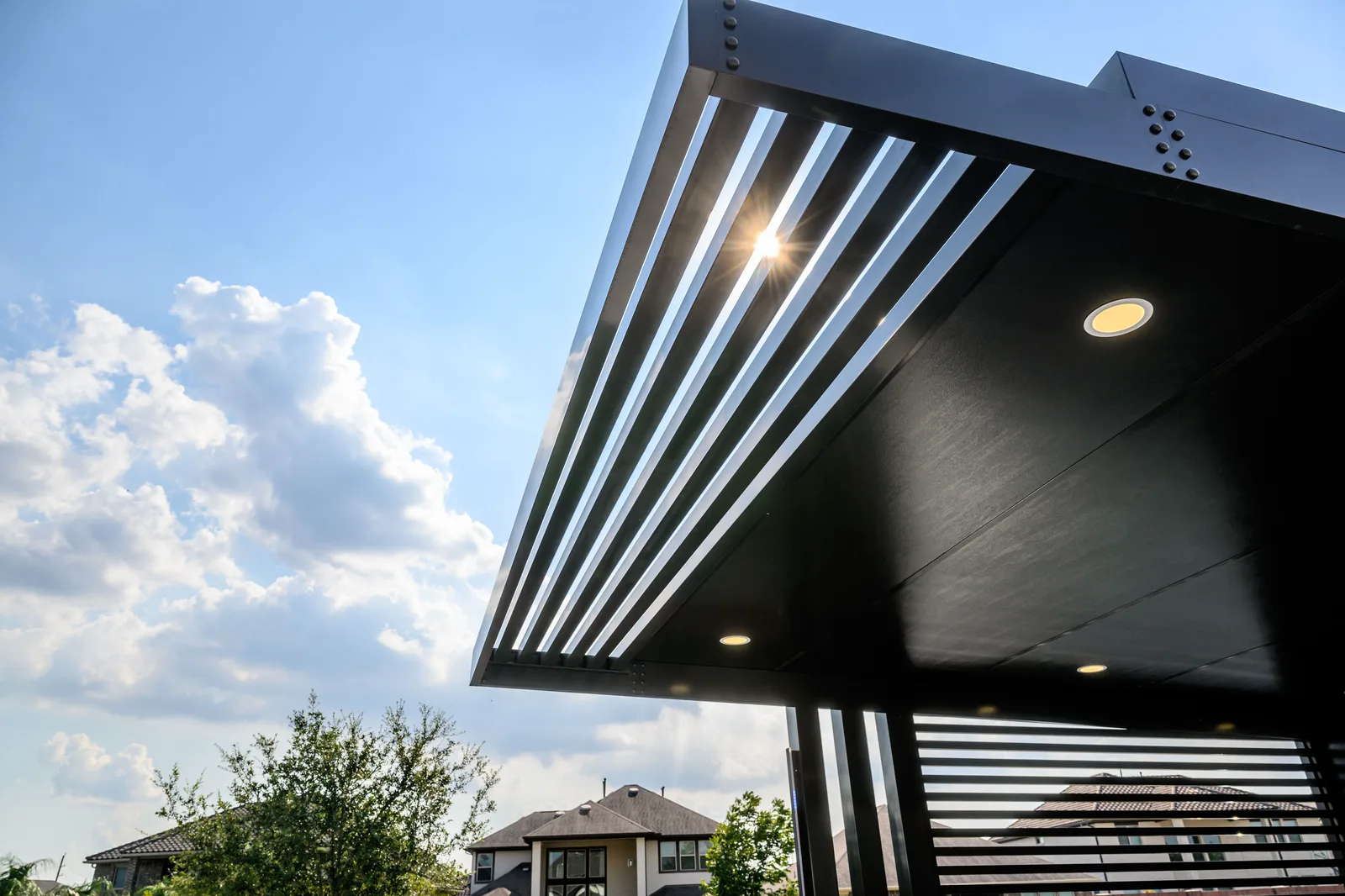
Houston is hard on outdoor structures. Summer heat, Gulf Coast humidity and sudden storms mean a structure has to handle a lot. Aluminum does not rust or rot, it will not warp in the heat, and termites have nothing to eat. A quality powder-coat finish adds a hard, baked-on layer that protects the metal and holds its color for years.
Compared with wood, which needs sealing and can swell, crack or rot in humid weather, aluminum keeps its shape and finish with almost no care. It is also strong for its weight, which allows slim, modern profiles without giving up structural strength, and it is non-combustible and fully recyclable. New Gen Patio structures are engineered for wind resistance of up to 120 mph. For the full comparison, see aluminum vs wood pergolas.
Are aluminum pergolas worth it?
Yes, for most Houston homeowners an aluminum pergola is worth it, because the money goes into the structure once instead of into upkeep every season. Paired with insulated roofing, it delivers the year round comfort that keeps a backyard usable in July and in January.
The value shows up in three places. First, comfort: a shaded, dry outdoor room extends the living space of the house. Second, time: there is no sanding, staining or repainting, just an occasional rinse. Third, longevity: a powder-coated aluminum frame keeps looking the same year after year, which matters if you ever sell. If low upkeep is your main reason for choosing a pergola, our aluminum pergola maintenance guide shows how little care the structure needs over time.
Design Choices: Roof, Layout, Size and Color
Four decisions shape almost every custom aluminum pergola: the roof, how it connects to the house, its size and height, and its color. Each one affects comfort, looks and price, so it pays to settle them before the first drawing.
Roof Options: Open Slats, Insulated Roofing, Polycarbonate and Louvered
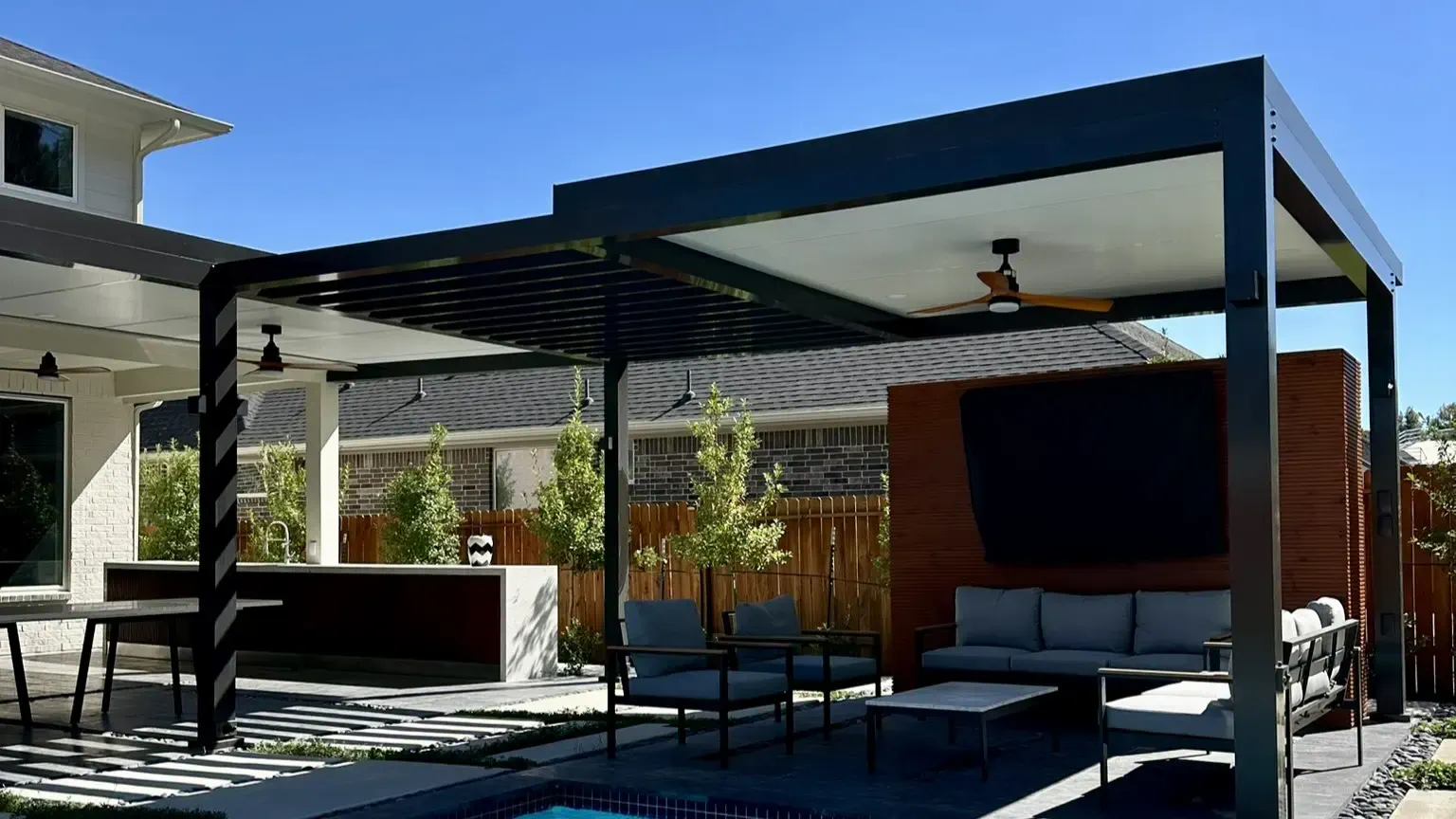
Your roof choice decides how much shade, rain protection and heat control you get. If your main goal is a cooler, all-season space, an aluminum pergola with roof panels that are insulated is usually the right call, and it is the most popular choice in Houston.
| Roof type | Shade | Rain protection | Best for |
|---|---|---|---|
| Open slats | Partial | None | Classic pergola look, gardens |
| Insulated roofing | Full | Full | Cooler, all-season outdoor rooms |
| Polycarbonate | Filtered light | Full | Bright spaces with UV protection |
| Louvered | Adjustable | When closed | Switching between sun and shade |
Insulated panels block heat and rain and keep the space noticeably cooler underneath, and they can hide wiring for lights. Polycarbonate lets natural light through while blocking rain and UV rays. Louvered roofs use adjustable blades you open for a breeze or close for shade and rain. We also build louvered roofs that open and close at the touch of a button.
Attached vs Freestanding
An aluminum pergola attached to house connects to your home so it feels like an extension of your living room and shares the roofline. A freestanding pergola sits anywhere in the yard, which is ideal near a pool, a garden or a fire pit area away from the house.
Attached structures need careful flashing and a solid connection to the house framing to prevent leaks, which is where professional installation matters most. Freestanding structures carry all their load on their own posts and footings, so post size and anchoring become the key design points. A third option, the cantilever, uses fewer posts for an open, modern look and keeps the view to the yard clear. We compare all three in attached vs freestanding vs cantilever patio covers.
Sizes and Heights for Houston Lots
Pergola size should match how you plan to use the space, from a compact 10 by 12 for a seating nook to a large structure that covers a dining set, a kitchen and a lounge. The easiest way to size it is to place your furniture first and then add room to walk around it.
Ceiling height affects airflow, how a ceiling fan performs and how the structure meets the roofline of the house. Taller structures feel more open and let heat rise away from you, while lower ones feel more intimate. Height also matters if you plan a fire pit underneath, since a patio built over one should be at least 10 feet high. That is why height is part of the design conversation, not an afterthought.
Colors and Finishes
Aluminum pergolas come in finishes like black, white, bronze and gray, plus custom options. A black aluminum pergola reads modern and bold; a white aluminum pergola feels light and traditional. Bronze and gray sit in between and blend well with brick and stone.
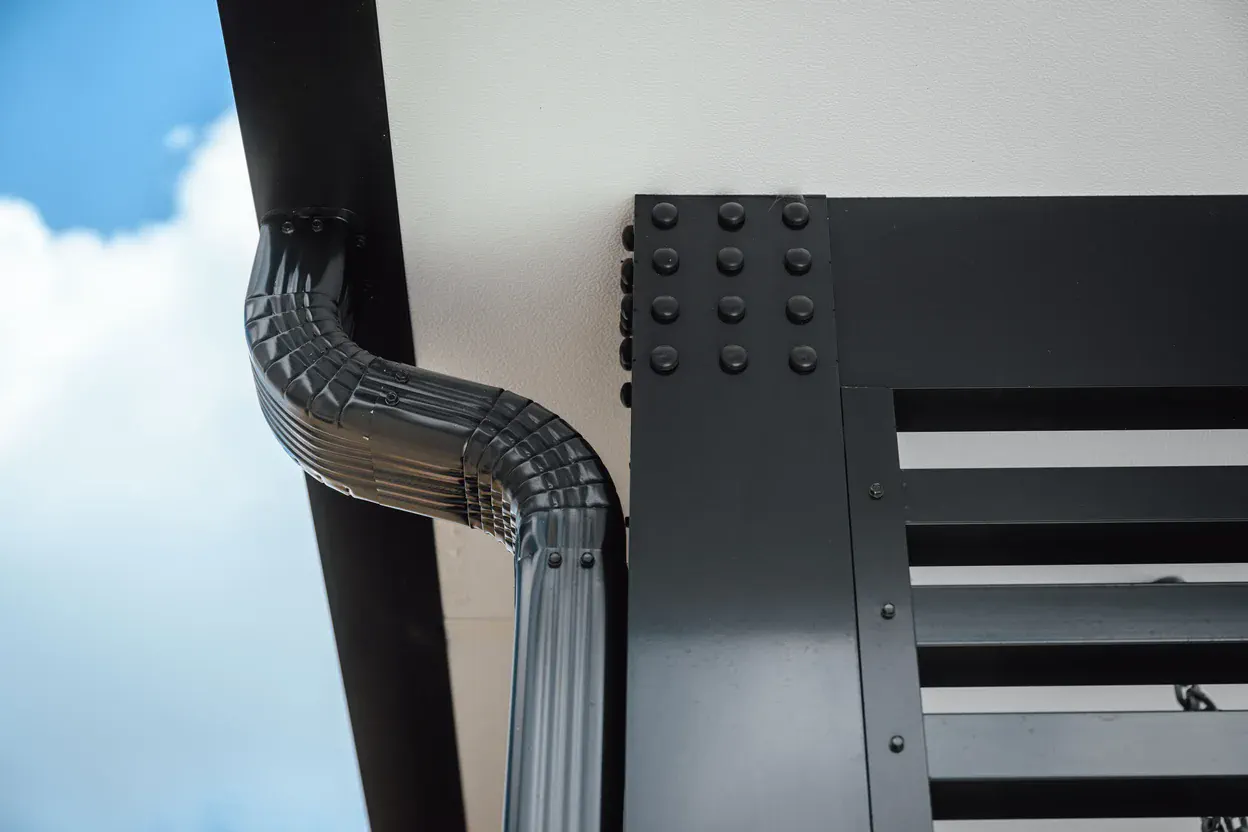
Powder coat is what keeps these colors from fading in the Texas sun. The powder is applied electrostatically and baked onto the aluminum, so it forms a hard, even layer instead of a thin coat of paint. A good starting point is to match the color to your window frames, gutters or trim, so the structure looks like part of the house. Browse finished projects in our covered patio project catalog.
What Drives the Price of an Aluminum Pergola
Every pergola is quoted to the project, so instead of a single number, it helps to know what moves the aluminum pergola cost in Houston and how to compare quotes from different builders fairly.
The main price factors
The biggest drivers are size, roof type and how the structure connects to your home. Here is what moves the price:
- Size and number of posts
- Roof type (open, insulated, polycarbonate, louvered)
- Attached or freestanding and the connection work involved
- Height and engineering for wind
- Add-ons like lighting, ceiling fans, screens, a TV wall or an outdoor kitchen
Because it is custom, you only pay for what your project needs. A larger footprint means more aluminum and more footings, and an insulated roof costs more than open slats but changes how the space feels in summer. Integrated features such as lighting or a TV wall are easier and cleaner to add during the build, since the wiring runs inside the frame.
Comparing quotes and financing
When you compare quotes, compare what each one includes, not just the total. Check whether it covers engineering, permits, HOA paperwork, footings, installation and the warranty, and whether the roof and finish are the same in every quote.
A lower number that leaves out permit drawings or wind engineering usually ends up costing more once those items are added. New Gen Patio includes the design, the drawings and HOA/permit documents and the installation in one plan, and offers a FREE consultation and design session so you can see the project before you commit. To spread the investment, NGP offers up to 0% financing for 18 months, so the investment fits your budget.
Permits, HOA and Timeline in Houston
An aluminum pergola in Houston usually needs a permit, often needs HOA approval, and is built quickly once both are in hand. Here is what to expect from each step.
Permits and HOA in Houston
Most solid, permanent structures need a permit, and if you live in an HOA community, the architectural committee will need to approve your design, colors and placement. We prepare the drawings and HOA/permit documents (engineer-stamped when required); you submit them and pay the fees.
Rules vary by city and county across Katy, Sugar Land, Cypress, The Woodlands, Spring and Conroe, so it is worth checking with your city or county before you settle on a size and location. HOA committees usually want a drawing, the color and the location on the lot, and some limit height or setbacks from the property line. Our Austin homeowners can start with our Austin patio cover permits and HOA guide.
Timeline: Built in 4 to 5 Business Days
Once the design is approved and the permit is in hand, a New Gen Patio aluminum pergola is typically built in 4 to 5 business days. Clean, fast and engineered to last: aluminum components arrive ready to assemble, so the crew spends its time on the build instead of on cutting and finishing on site.
The longer part of the process is usually the paperwork, not the construction. The usual order is a free consultation and design session, the drawings and HOA/permit documents, approval, and then the build. Because the work is fast and aluminum is not affected by cold weather, many homeowners build in fall or winter so the patio is ready for spring. Our fall and winter patio ideas show how much use a covered patio gets in the cooler months.
Maintenance and Warranty
This is where aluminum pays off: maintenance is minimal and the structure and its finish are both under warranty. Here is what care really looks like year to year and what the coverage includes.
What maintenance really looks like
There is no sealing, staining or rust to manage. A rinse with a garden hose and a mild soap a couple of times a year keeps the powder coat clean, and clearing leaves from the roof and gutters keeps rain draining properly.
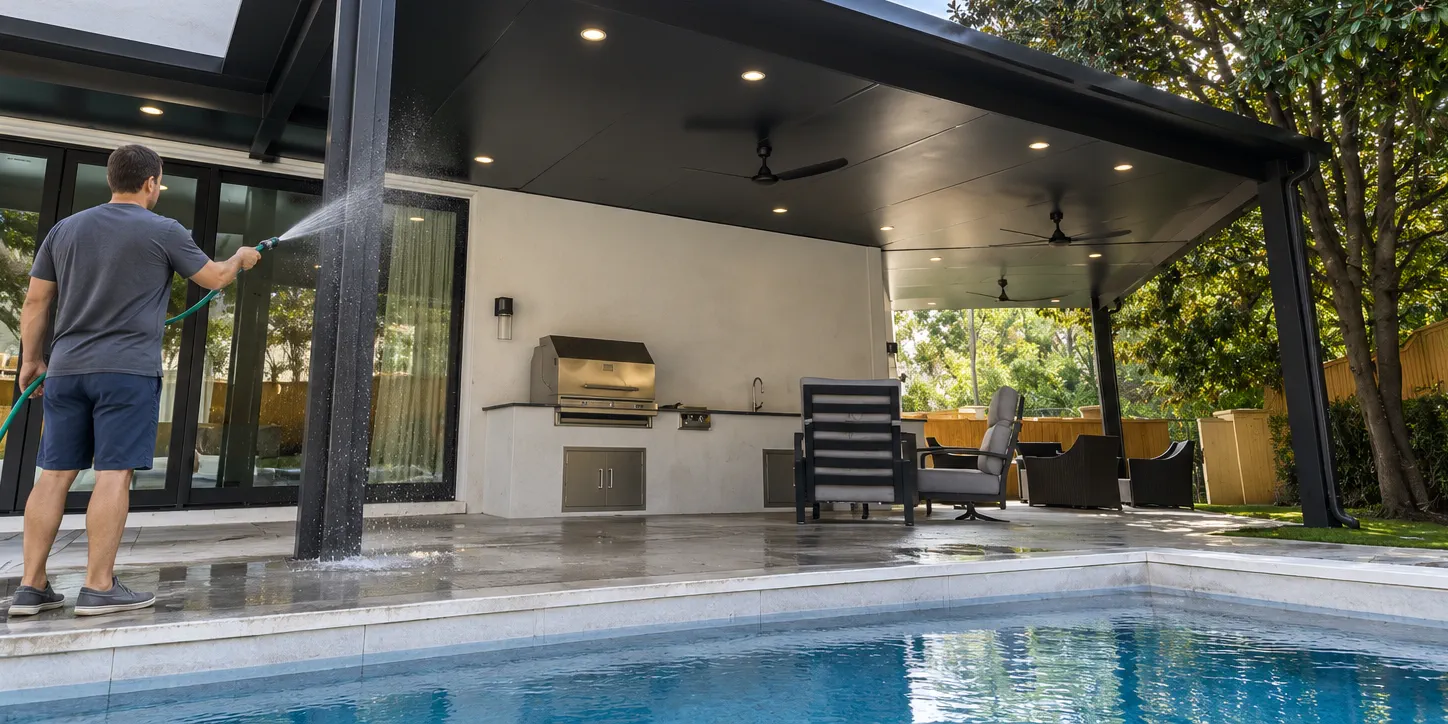
That is the whole routine. Compared with a structure that needs sanding and a fresh coat every few seasons, an aluminum pergola mostly asks you to keep it clean. After a storm, a quick look at the gutters and the base of the posts is enough. Avoid abrasive pads, harsh solvents and pressure washers held close to the surface, since they can scratch or dull the finish. If you have lights or other electrical add-ons, test them before the summer and holiday seasons. For step-by-step care tips, see aluminum pergola maintenance.
Warranty and Coverage
New Gen Patio backs its work with a 5-year structural warranty, a 5-year finish warranty and a $0 Maintenance Guarantee, so the structure stays looking new with almost no effort.
That coverage reflects how the structure is built: architectural-grade aluminum, a powder-coat finish and engineering for wind resistance of up to 120 mph. When you compare builders, ask what each warranty covers, for how long, and whether labor and electrical are included. A clear written warranty is one of the best signs that a builder expects the structure to last, and it gives you a simple reference if anything ever needs attention.