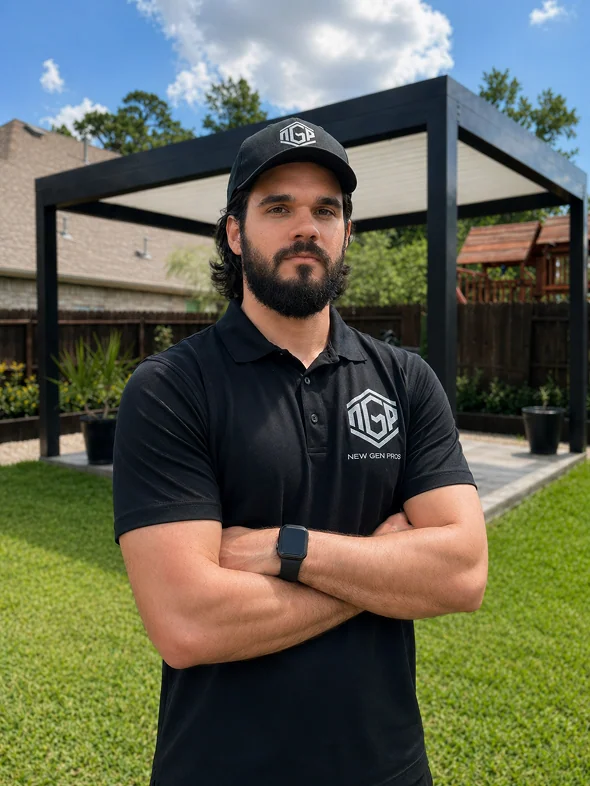
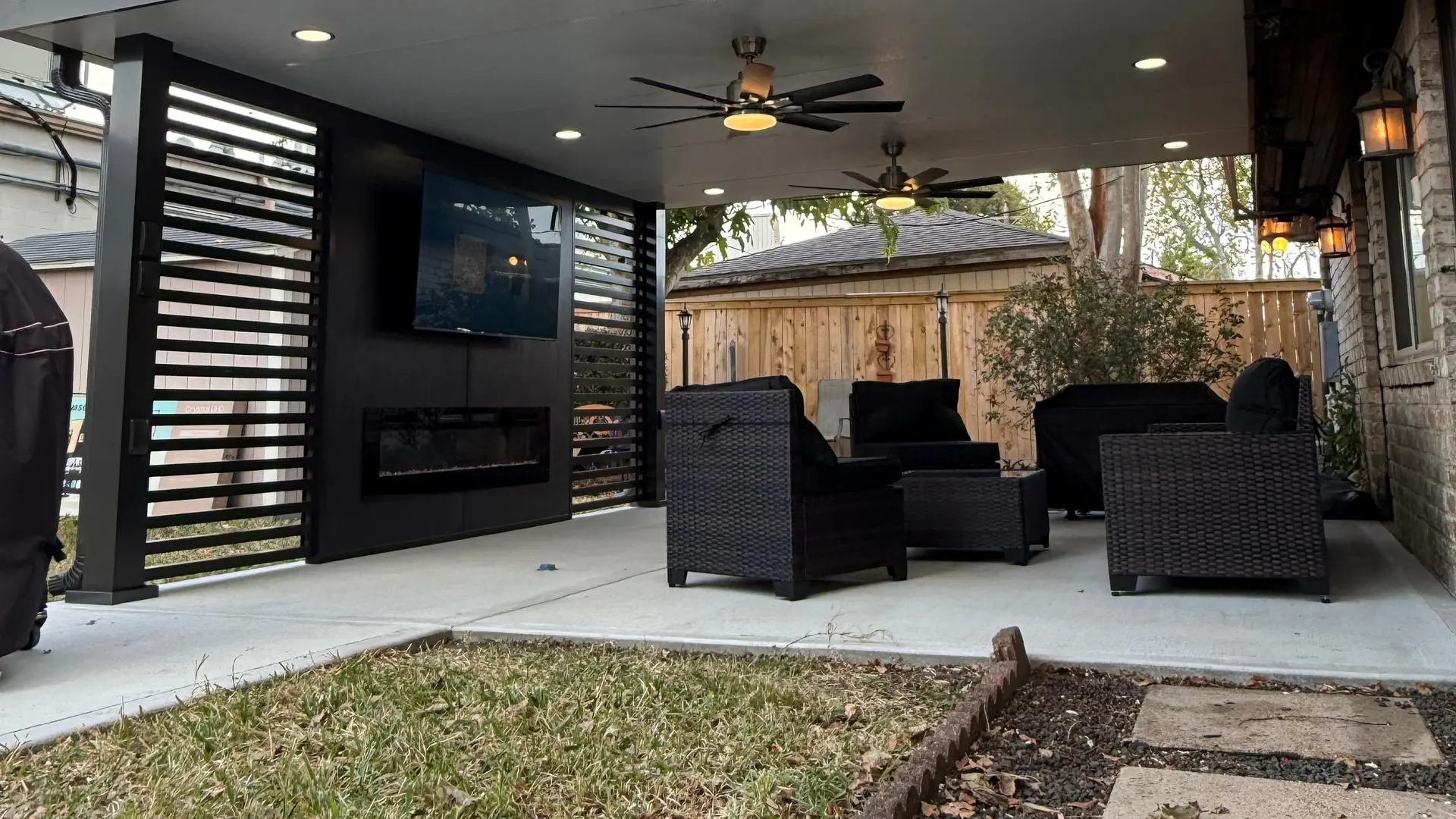
Texas winters are short and mild, so you do not need to build a permanent room to keep using your patio through a cold front. The smart move is a reversible patio enclosure for winter: one you close when the wind turns cold and open again when the warm weather returns. Done right, it keeps the patio cozy in January without trapping humidity or losing the breezy space you enjoy in summer.
This guide covers what winter really means on the Gulf Coast and in Central Texas, the reversible options, how to heat the space safely under an aluminum roof and the mistakes to avoid. New Gen Patio has built 900+ outdoor living spaces across Houston and Austin.
What "Winter" Means for a Houston Patio
Winter on a Houston patio means a handful of cold fronts, not months of snow. A front usually arrives with a gusty north wind and a band of rain, drops the temperature quickly for a day or two, and then gives way to clear, mild weather. Austin sees more cold nights and the occasional hard freeze, but the pattern is similar: short cold spells between long stretches of comfortable days.
That changes the goal. You are not sealing a space against a season; you are blocking wind and holding warmth on demand. Wind is the real enemy, because moving air pulls heat away from people much faster than still, cool air does. A patio that cuts the wind and adds a focused heat source stays comfortable on evenings that would send you indoors from an open slab. For decor and hosting ideas, see our fall and winter patio ideas for Texas homeowners.
Reversible Patio Enclosure for Winter: Screens, Clear Panels and Curtains
Reversible options close off wind and rain when a front comes through and disappear when spring returns. They range from motorized screens to simple outdoor curtains. For a full comparison with glass and fixed screens, see our guide to patio enclosures in Houston.
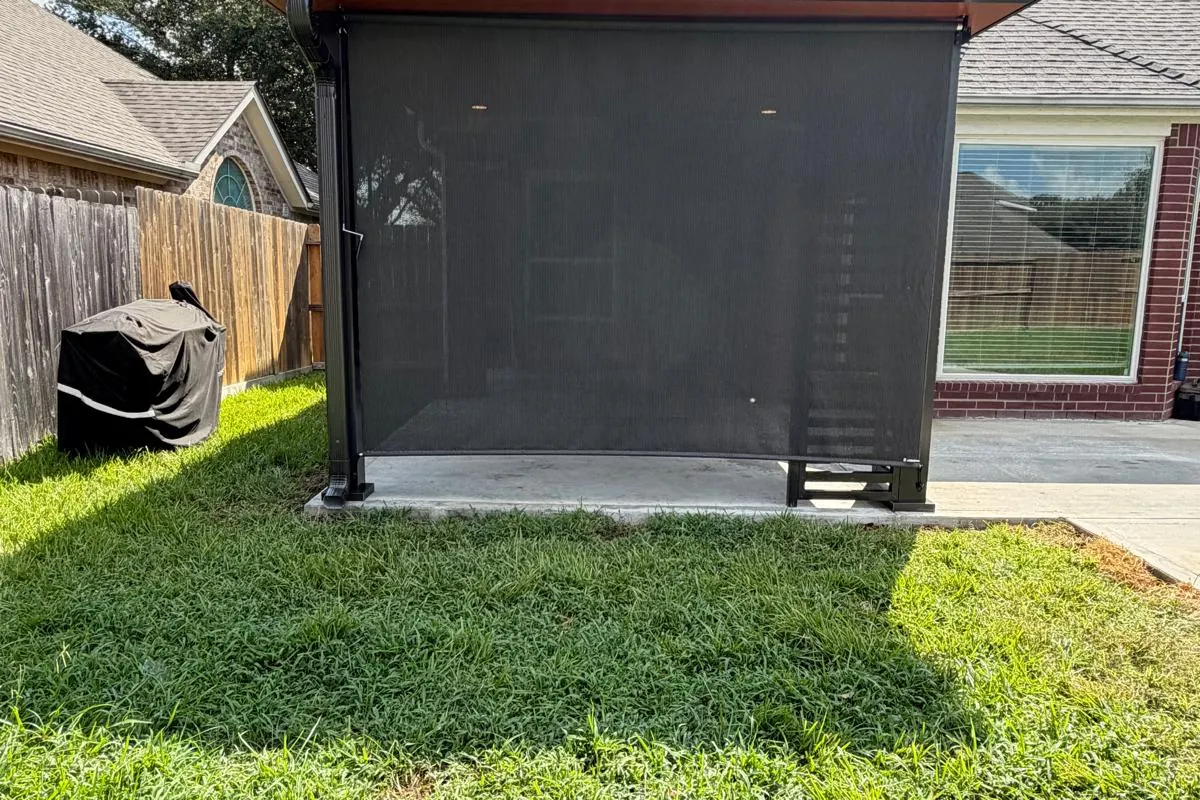
Motorized Screens and Zip Shades
Motorized screens and zip-track shades drop along side tracks at the push of a button and roll up into a slim housing when the weather clears. That speed is the point: when a front blows in during dinner, the patio closes in seconds, and the next sunny afternoon it is fully open again. The tracks hold the fabric at both edges, so it does not flap or bow the way a loose panel would. Our Electrical Zipshades work this way.
New Gen Patio offers Electrical Zipshades, coordinated with the structure under one project plan. For winter use, the fabric choice matters most. A tighter weave or a solid panel blocks more wind, while a standard mesh mainly softens the breeze and the glare of low winter sun. Ask which fabrics suit the side of the patio that takes the north wind.
Clear Roll-Down Panels
Clear vinyl panels are the most direct answer to a cold front. They block wind and rain completely while keeping the view of the yard, so the patio feels like a room without losing its connection to the outdoors. Some systems roll up by hand with straps or zippers; others are motorized and run in side tracks like a screen. New Gen Patio builds clear vinyl panels as part of its enclosure options, coordinated with the structure.
They come with trade-offs worth knowing. Clear vinyl can fog on cold, humid mornings, it scratches if it is wiped with the wrong cloth, and it should stay down only when needed, because a fully closed patio holds moisture. In a Gulf Coast climate, the best clear panels are the ones you lower for a front and raise again as soon as it passes. Think of them as a storm door for the patio, not a permanent wall.
Outdoor Curtains and Privacy Walls
Outdoor curtains are the lightest and simplest way to block a quick wind. Hung from a rod or cable along a beam, they slide closed on the windward side in seconds and add a soft, finished look. They will not stop rain or hold in warmth the way a panel does, and in Houston humidity they need fabric made for outdoor use, or they can mildew within a season.
For a side that takes the north wind every winter, a permanent solution may make more sense. New Gen Patio builds Privacy Walls and slats that shield a seating area from wind and the neighbors' view all year, either with the initial build or added later. Combine a privacy wall on the windward side with a reversible option on the open sides, and you get shelter where you need it and an open patio everywhere else.
Heating Under an Aluminum Roof
The safest way to heat an enclosed patio is with a heat source designed for use under a roof, installed with the clearances its manufacturer specifies. Infrared heaters that stand on the floor (on a stand, a tower or a tripod), or mount on a post or a wall where the manufacturer allows it, are a common choice because they warm people and surfaces directly rather than the air, so they keep working even with one side open. Electric infrared bar heaters can also be fixed to the beams, never to the roof panels; on an NGP structure, the roof is kept for lights, ceiling fans and those beam-mounted bars. A heater is an add-on you choose and buy for your patio; the built-in heat options are below. Electric models need only a dedicated circuit.
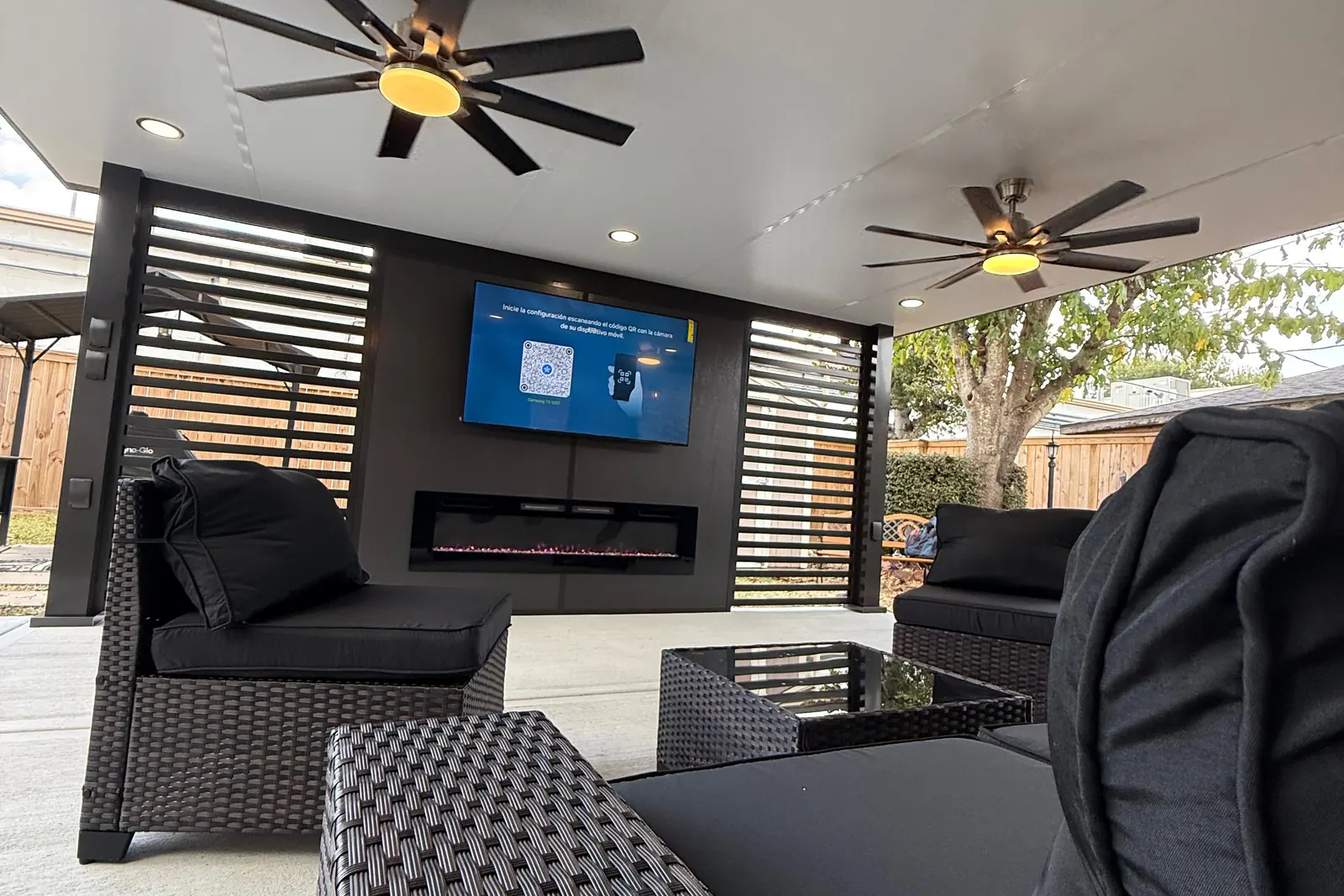
New Gen Patio handles electrical in-house for lighting and fans, and integrates electric fireplaces into its TV walls, which add warmth and a focal point with no smoke and no venting. It can also build a patio over a fire pit when the structure is 10 feet high or more. An insulated roof helps hold that warmth over the seating area, and you can see how it is built on our custom aluminum pergola and patio cover page. Whatever you choose, never close a patio completely with a flame running, because combustion needs fresh air. Our guide to a fireplace or fire pit under a covered patio covers clearances in detail.
Keeping Airflow for Spring and Summer
A reversible enclosure is only worth it if it opens back up completely. By spring, Houston is warm and humid again, and the patio needs every bit of breeze it can get. Choose a system that retracts fully into a housing or rolls up out of the way, so the open sides go back to being open rather than a wall of mesh or vinyl you look through all summer.
Plan the summer setup at the same time as the winter one. Ceiling fans, which New Gen Patio wires into the structure, keep air moving under the roof, insect mesh can stay down on mosquito-heavy evenings without blocking all airflow, and an insulated roof keeps radiant heat off the seating area. The aim is one patio that changes with the season: closed and warm during a front, open and shaded in July. Our guide to aluminum patio covers in Houston and what works in Gulf heat covers the warm-weather side.
Mistakes to Avoid
The most common mistake is closing the patio too tightly. Gulf Coast air carries moisture even in winter, and a closed space with no ventilation can collect condensation, mildew the cushions and fog the panels. Leave a gap, open a panel or raise the enclosure on dry days so the space can breathe.
A few other errors come up again and again:
- Letting panels or curtains swing into the path of ceiling fans or heaters.
- Buying thin plastic sheeting or light-duty panels that tear or yellow after one Gulf Coast season.
- Running a fire pit or any open flame inside a fully closed patio.
- Adding tracks to a cover that was never designed to carry them.
- Waiting for the first cold front to start planning.
None of these is hard to avoid. They simply need to be thought through before the enclosure goes up, not after the first cold night.
Timeline: Install Before the First Front
The best time to plan a winter enclosure is before the first cold front, because fronts arrive fast and rarely with much warning. That said, it is rarely too late in a Texas winter: cold spells keep coming through February, so an enclosure added after the first front still earns its keep for the rest of the season.
The process starts with a FREE consultation and a free 3D design. If the enclosure is part of a new aluminum patio cover, we prepare the drawings and HOA/permit documents (engineer-stamped when required); you submit them and pay the fees. Once the permit is in hand, most structural installations take 4 to 5 business days. The time needed to add shades or panels depends on the product and the openings. If a front arrives before the work is done, outdoor curtains and a portable heater can bridge the gap. Our aluminum pergola buyer's guide walks through the full timeline.