Between mosquitoes, oak pollen and sudden Gulf Coast rain, an open patio in Houston gets used less than it should. Enclosing it fixes that, but there are four very different ways to do it, and picking the wrong one means paying for features you never use or still swatting bugs at dinner. Choosing a patio enclosure in Houston starts with one question: what are you actually trying to keep out?
This guide compares motorized screens, fixed screens, glass and a simple covered patio, explains which problem each one solves, and shows why the structure underneath matters as much as the enclosure itself. It also covers permits, cost drivers and upkeep. New Gen Patio has built 900+ outdoor living spaces across Houston and Austin.
Patio Enclosure Options in Houston: 4 Ways to Enclose a Patio
There are four main ways to enclose a Houston patio: motorized screens, fixed screens, glass and a covered patio with an insulated roof. The first three are explained below. The covered patio gets its own section, because for many homes it is enough.
Motorized Screens
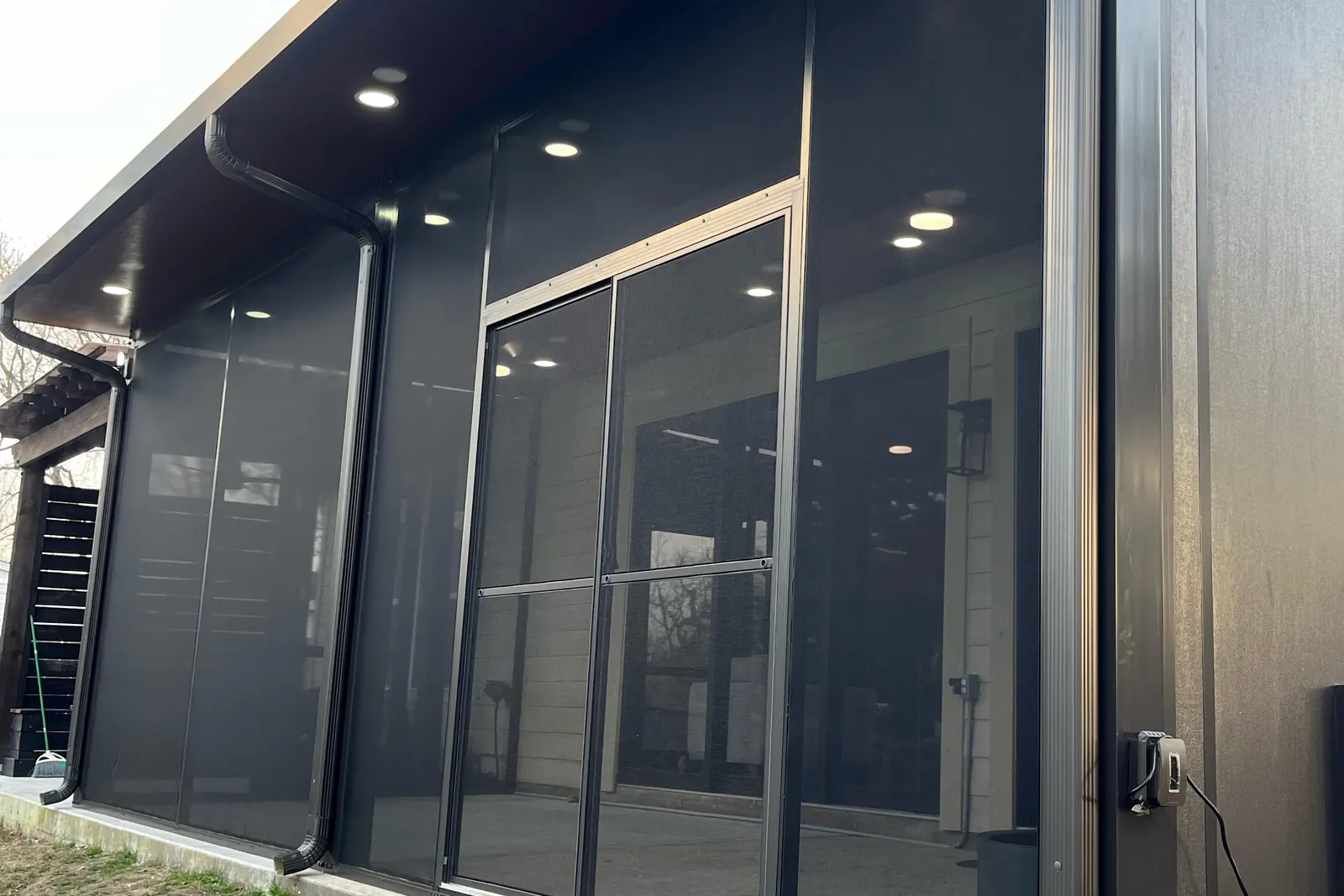
Motorized screens are retractable panels of mesh or clear vinyl that roll down along side tracks at the push of a button and disappear into a slim housing when you do not need them. Their big advantage is flexibility: the patio is open on a mild afternoon and closed against mosquitoes or a cold front an hour later, without anyone moving furniture or unhooking panels.
They are also the most involved option. Each screen needs a motor, a power source and a straight, solid surface for its tracks, which is why they work best when they are planned into the structure from the start. New Gen Patio offers Electrical Zipshades, coordinated with the rest of the project under one plan, as you can see on our outdoor living services page. Our Electrical Zipshades work this way.
Fixed Screens and Enclosure Nets
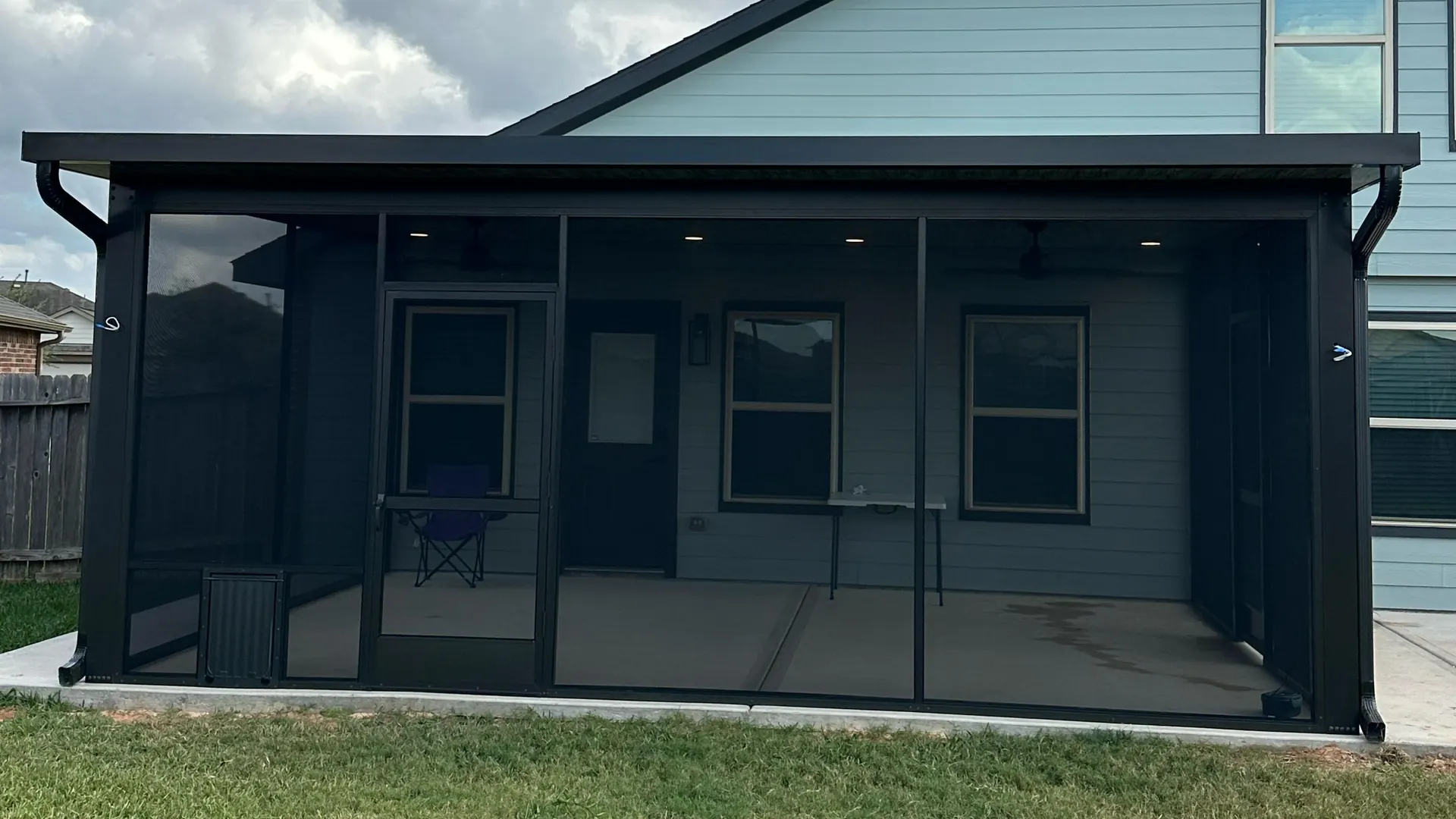
Fixed screens are mesh panels framed permanently into the openings of a patio, and New Gen Patio builds them as part of the enclosure. They are the simplest way to build a screen room: no motors, no wiring and very few moving parts. That makes them a good fit for sides that rarely need to open, such as the side facing a neighbor or the prevailing wind. The trade-off is that the mesh stays in place all year, which slightly softens the view and the breeze even on perfect days.
Enclosure nets work toward the same goal. New Gen Patio offers Enclosure Nets as part of its privacy and shade line, designed to protect a patio from sun, wind and Texas mosquitoes, and they can be planned with the initial build or added to an existing patio. With any screened space, the details decide whether it really stays bug-free: a proper door panel, a solid lower section on the screen walls and a tight seal where the frame meets the slab.
Glass Enclosures and Sunrooms
A glass enclosure turns the patio into a sunroom: a closed room with windows or sliding glass panels that can be heated and cooled. It is the only option on this list that delivers true climate control and real noise reduction, which matters on a busy street or next to a pool pump. It also changes the nature of the space. A sunroom behaves like part of the house rather than a patio, and it is often treated more like an addition when it comes to permits.
In Houston, the main downside is heat. Glass traps solar gain, so a sunroom generally needs its own cooling plan for much of the year, and it gives up the open-air feel that makes a covered patio worth having. New Gen Patio also builds glass enclosures and sunrooms, and our designers will help you weigh whether you really need a room or a patio you can close on the days that call for it.
When a Covered Patio Is Enough
If your main problems are sun and rain, a covered patio with an insulated roof may be all you need. An insulated aluminum roof blocks direct sun, cuts the heat that radiates down onto the seating area and keeps furniture dry in a summer downpour, all while leaving the sides open to the breeze. For many Houston backyards, that solves most of what an enclosure would. Our guide to aluminum patio covers in Houston and what works in Gulf heat explains the roof options in detail, and you can see how we build them on our aluminum patio covers in Houston page.
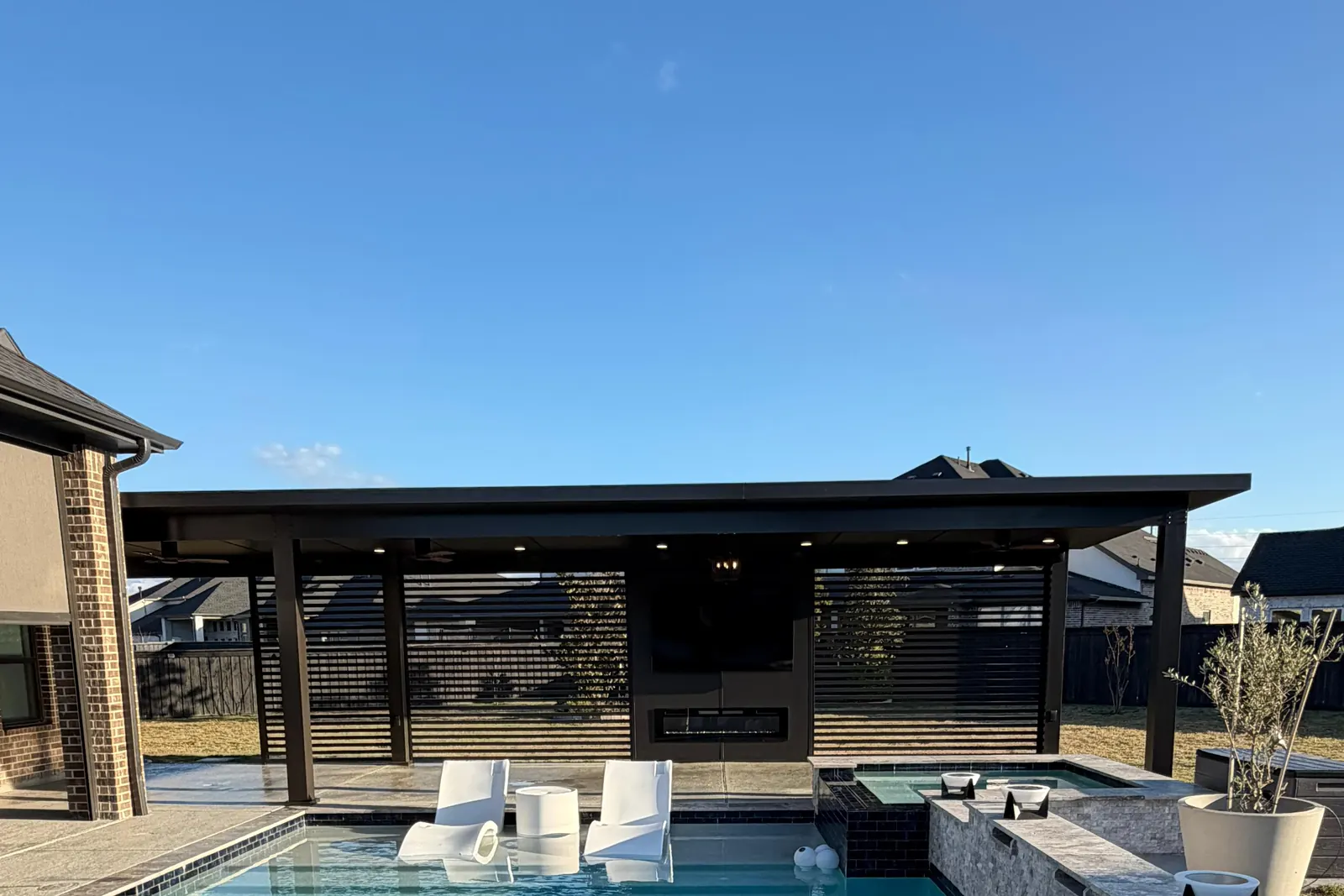
The gaps are bugs and blowing rain. Mosquitoes do not care about a roof, and a storm with strong wind can push rain well under the edge. That is where partial solutions come in. New Gen Patio builds Privacy Walls, Deco Shades and slats that close off one or two sides against wind, low afternoon sun or the neighbors' view, without boxing in the whole patio, and Privacy Walls and slats can be added after the structure is built. Start with the roof and add screens only where the problem shows up.
Bugs, Pollen, Rain and Privacy: Which Option Solves What
The fastest way to avoid overbuilding is to match each option to the problem it solves. Screens handle bugs, glass handles climate and a roof handles sun and rain. The table below sums it up for the problems Houston homeowners mention most.
Matching the Problem to the Solution
Screens solve bugs and most pollen. Insect mesh is fine enough to stop mosquitoes and filters much of the oak pollen that coats Houston patios each spring, though the finest particles can still get through. Motorized screens add something fixed ones cannot: control. Lower them for a windy evening, a sideways shower or privacy from the street, and raise them when the weather turns perfect.
Glass adds what screens never will: temperature control and quiet. If you want to sit in a heated or air-conditioned space in January or August, only a sunroom gets you there. Privacy on its own is the easiest problem to solve, because a privacy wall or a run of slats on one side does the job without enclosing anything else. Write down the two or three problems that keep you indoors, and choose the lightest option that fixes them.
Screen Room vs Sunroom vs Covered Patio
A covered patio gives shade and rain protection, a screen room adds protection from bugs, and a sunroom is a glass enclosure you can heat and cool. That is the short answer. The decision table below turns it into a quick choice based on the main goal you have for the space.
| Goal | Best option |
|---|---|
| Sun and rain only | Covered patio with insulated roof |
| Bugs and pollen | Fixed or motorized screens |
| On-demand flexibility | Motorized screens |
| Wind and privacy on one side | Privacy wall or slats |
| Climate control | Glass sunroom |
Two notes on reading it. First, most patios have more than one goal, so the answer is often a combination, such as an insulated roof with screens on the open sides. Second, motorized screens with clear vinyl panels can block wind and rain on demand, and New Gen Patio builds clear vinyl panels for the sides that need them. That is why they often bridge the gap between a screen room and a sunroom for homeowners who do not want to give up the open patio.
Structure Matters: Enclosing Over Aluminum
Screens and glass are only as good as what they attach to. The frame decides how straight the tracks run, how well the enclosure handles wind and how finished the whole patio looks once the work is done.
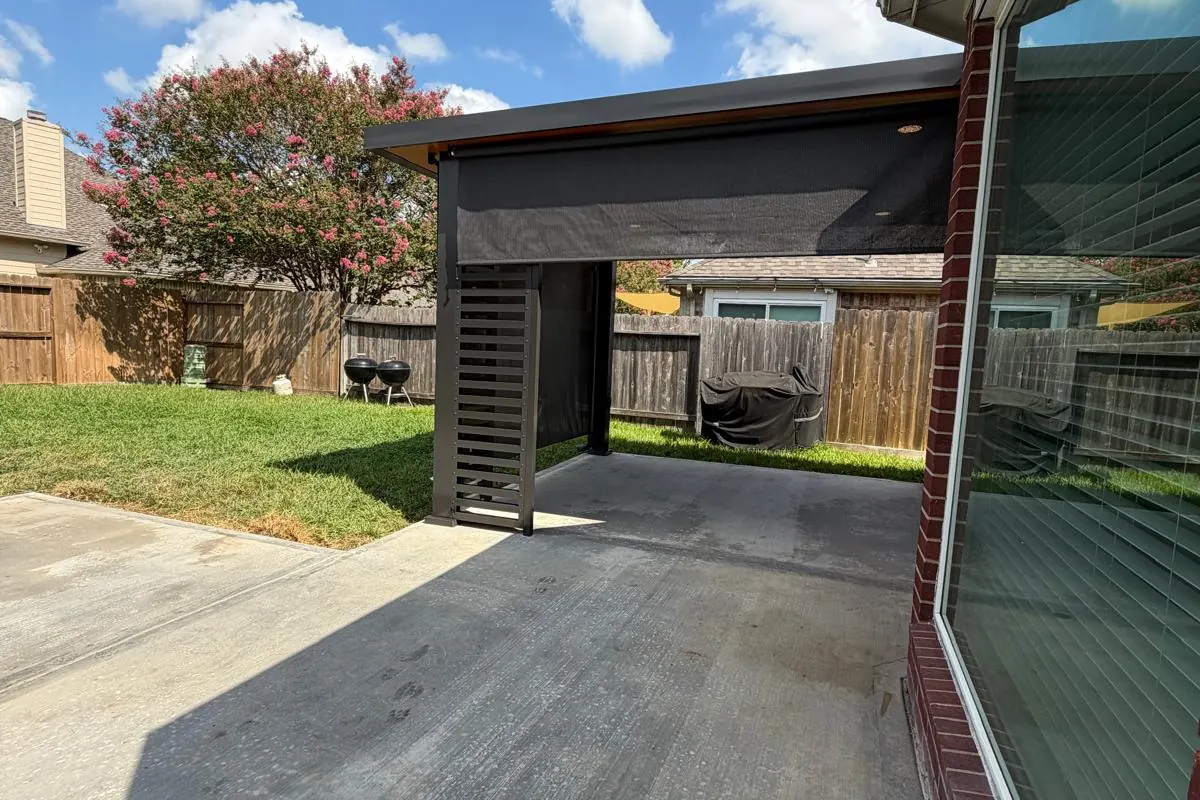
Designed In, Not Added On
The cleanest enclosures are planned together with the structure. When the posts, beams and header are laid out with screens in mind, the openings come out square, the tracks mount to solid aluminum and the wiring for motors and controls runs inside the frame instead of along the outside. The result looks like one piece rather than a patio with screens bolted onto it.
New Gen Patio builds its custom pergolas and patio covers from powder-coated architectural aluminum, engineered for wind resistance of up to 120 mph and backed by a 5-year structural warranty, a 5-year finish warranty and a $0 Maintenance Guarantee. That frame is what a screen or net hangs on. If you are planning a new patio and think you might enclose it later, say so at the design stage, even if the enclosure comes in a second phase. Planning the openings and the power now is far easier than reworking the structure afterward.
Retrofitting an Existing Cover
Older covers were rarely built with an enclosure in mind. Posts may be out of plumb, beams may sag slightly between supports and the openings may be odd sizes, so screens either need custom work to fit or end up with gaps where bugs get in. A cover that already struggles with wind or water will also have a harder time once a screen wall starts acting like a sail in a storm.
Before adding an enclosure to an existing patio, have the structure checked: post condition, attachment to the house, roof drainage and whether the frame can carry tracks and motors. Sometimes the answer is to add screens. Sometimes it is to replace the cover with a structure designed to take them, such as an attached aluminum patio cover tied properly into the house. For how each cover type connects to a home, see attached vs freestanding vs cantilever patio covers.
Permits, HOA and Cost Drivers
Two questions come up in every enclosure project: what approvals it needs and what drives the price. Neither has a one-line answer, but both are easy to plan for once you know what affects them.
Permits and HOA
A solid enclosure usually needs a permit, and HOA communities typically require committee approval before work starts. Screens and nets on a cover may be treated differently from walls or glass, which can change how the space is classified, so the rules depend on what you build and where. Check with the City of Houston, or with your city or county if you live in Katy, Sugar Land, Cypress, The Woodlands, Spring or Conroe, and read your HOA guidelines before you commit to a design.
On the projects New Gen Patio builds, we prepare the drawings and HOA/permit documents (engineer-stamped when required); you submit them and pay the fees. If you live in Austin, our Austin patio cover permits and HOA guide walks through the process there. Rules also differ from one Houston suburb to the next, so it pays to confirm them locally before the design is final.
Cost Drivers and Financing
Price depends on the enclosure type, the number and size of the openings, and the mesh, vinyl or glass you choose. Motorized screens add a motor, controls and wiring for each opening, while fixed screens and nets are simpler. Glass is a different category, closer to building a room. The condition of the structure matters too, because an enclosure designed into a new aluminum patio avoids the rework an older cover may need.
Because every patio is different, the only reliable number is a quote based on your actual openings. New Gen Patio offers a FREE consultation and free 3D design, plus up to 0% financing for 18 months with a soft-pull approval in 15 minutes that does not affect your credit. The factors behind the structure itself are explained in our aluminum pergola buyer's guide.
Maintenance in Houston Humidity
Screens need an occasional rinse and glass needs regular cleaning; both are low upkeep on a quality aluminum frame. Hose off mesh and tracks a few times a year, more often during heavy pollen season, and brush out the leaves and debris that collect at the bottom of the tracks so motorized screens keep running smoothly. Glass panels need the same attention as any window, plus a check of the seals and drainage so water runs out instead of pooling.
The frame itself asks for very little. Powder-coated aluminum does not need painting, sealing or staining, and New Gen Patio backs its structures with a 5-year structural warranty, a 5-year finish warranty and a $0 Maintenance Guarantee. In practice, maintenance comes down to keeping the enclosure clean and checking moving parts once a season. Our aluminum pergola maintenance guide covers the full routine.